Overview
Semaglutide is a synthetic analog of human glucagon-like peptide-1 (GLP-1), a 31-amino-acid incretin hormone involved in glucose regulation and satiety signaling. It's one of the most extensively studied compounds in metabolic research literature, and structurally modified versions of it have also been developed into approved pharmaceutical products for diabetes and weight management.
Important distinction: the research-grade semaglutide referenced in academic literature and sold for laboratory use is a distinct product from any approved pharmaceutical — different manufacturing standards, formulation, and regulatory status apply. Research-grade material is not interchangeable with, and should never be treated as equivalent to, an approved drug product.
What clinical trials have shown
Semaglutide has one of the largest human clinical trial bases of any compound referenced on this site, run under Novo Nordisk's STEP (Semaglutide Treatment Effect in People with Obesity) program plus a large cardiovascular outcomes trial, SELECT.
STEP 1 (2021)
The pivotal trial, published in the New England Journal of Medicine, followed 1,961 adults with obesity or overweight over 68 weeks. Participants receiving semaglutide lost a mean of 14.9% of body weight, compared to 2.4% with placebo. Roughly 86% of the semaglutide group lost at least 5% of body weight, versus 32% on placebo — a threshold generally considered clinically meaningful. Gastrointestinal side effects (nausea, vomiting, diarrhea) were the most common adverse events, mostly mild-to-moderate and concentrated during dose escalation.
STEP 5 and longer-term data (2 years)
A follow-up trial extending to 104 weeks found sustained results: a mean 15.2% weight loss with semaglutide versus 2.6% with placebo, with 77% of participants reaching the 5%-or-greater threshold. Separately, an extension analysis found that weight regain occurs after semaglutide is discontinued — participants regained roughly two-thirds of their lost weight percentage within about a year of stopping treatment, indicating the effect depends on continued use rather than being a one-time reset.
SELECT cardiovascular outcomes trial
A separate, much larger trial (over 17,600 participants with existing cardiovascular disease and overweight or obesity but without diabetes) found semaglutide reduced major adverse cardiovascular events by 20% relative to placebo, alongside sustained weight loss through 4 years of follow-up — among the longest-duration data available for this compound class.
What this data does and doesn't tell you: these results describe the approved pharmaceutical formulation (marketed as Ozempic and Wegovy) under physician supervision in large controlled trials. They say nothing about the safety, purity, or effects of research-grade material used outside that regulated context.
Areas of investigation
- Glucose homeostasis. The foundational body of literature examines semaglutide's effect on insulin secretion and glucagon suppression in response to glucose, via GLP-1 receptor activation.
- Satiety and gastric emptying. A substantial share of research focuses on GLP-1 receptor agonism's effect on appetite signaling and the rate of gastric emptying in animal models.
- Receptor pharmacokinetics. Because semaglutide's structural modifications (compared to native GLP-1) extend its half-life significantly, it's frequently used as a reference compound in incretin pharmacokinetic research.
What this doesn't mean: this entry describes the mechanisms studied in the GLP-1 receptor agonist literature broadly. It is not guidance about, or a claim regarding, any approved pharmaceutical product.
Molecular profile
External reference: Semaglutide on PubChem (CID 56843331)
| Property | Value |
|---|---|
| Sequence class | 31-residue GLP-1 analog |
| Receptor target | GLP-1 receptor (incretin pathway) |
| Solubility | Water-soluble; typically reconstituted with sterile or bacteriostatic water in lab settings |
| Stability notes | Structural modifications relative to native GLP-1 are associated with extended stability and half-life in the literature |
Figures summarize commonly cited characteristics in the research literature and are provided for reference only — always consult the certificate of analysis (COA) for a specific research batch.
Handling & storage in a research setting
Research-grade semaglutide follows standard lyophilized-peptide handling: frozen or refrigerated storage prior to reconstitution, protection from light and moisture, and limited freeze-thaw cycling once dissolved. See Protocols for general laboratory practices.
Research materials
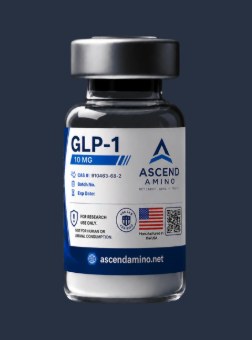
Batch-tested research-grade semaglutide is available through Ascend Amino, including lot-specific certificates of analysis. Research use only — not for human or veterinary use.
Further reading
For background on this compound class, see Metabolic and appetite-signaling peptides in the Science Hub.