Overview
GHK-Cu is a naturally occurring tripeptide — glycyl-L-histidyl-L-lysine — bound to a copper ion, first identified in human plasma and later found to decline in concentration with age. Because it occurs naturally in the body, it has one of the longer research histories of any compound in this library, with literature spanning wound healing, dermatology, and more recently gene-expression research.
Areas of investigation
- Dermal and wound-healing models. The largest body of literature examines GHK-Cu's association with collagen and elastin synthesis, and its effects in skin-repair and wound-healing models.
- Copper-dependent enzymatic activity. Research has explored GHK-Cu's role in activating copper-dependent enzymes involved in tissue remodeling and antioxidant processes.
- Gene expression research. A newer direction in the literature uses GHK-Cu as a tool compound in studies examining its association with broad patterns of gene expression related to tissue repair and inflammation.
What this doesn't mean: despite being one of the more studied compounds here, most GHK-Cu research is still in-vitro or animal-model work. This entry maps research direction, not established outcomes in humans.
Molecular profile
External reference: GHK-Cu (copper complex) on PubChem (CID 71587328)
| Property | Value |
|---|---|
| Sequence class | Tripeptide (Gly-His-Lys) complexed with copper |
| Origin | Naturally occurring in human plasma; synthesized for research use |
| Solubility | Water-soluble; typically reconstituted with sterile or bacteriostatic water in lab settings |
| Stability notes | The copper complex is reported to be comparatively stable, though still subject to standard light and freeze-thaw precautions |
Figures summarize commonly cited characteristics in the research literature and are provided for reference only — always consult the certificate of analysis (COA) for a specific research batch.
Handling & storage in a research setting
GHK-Cu follows standard lyophilized-peptide handling: frozen or refrigerated storage prior to reconstitution, protection from light and moisture, and limited freeze-thaw cycling once dissolved. See Protocols for general laboratory practices.
Research materials
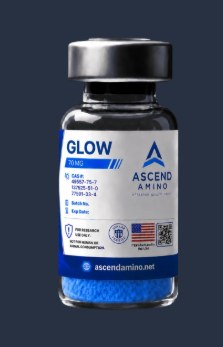
Batch-tested GHK-Cu for laboratory research use is available through Ascend Amino, including lot-specific certificates of analysis. Research use only — not for human or veterinary use.
Further reading
GHK-Cu is a common component of multi-peptide research blends — see the GLOW Blend and KLOW Blend entries for how it's studied in combination with other compounds.