Overview
TB-500 is the name commonly used in the research supply trade for a synthetic peptide corresponding to the active region of thymosin beta-4 (Tβ4), a protein that occurs naturally in almost all human and animal cells. Thymosin beta-4 itself is a much larger, 43-amino-acid protein; TB-500 refers to the shorter, synthesized fragment that research suggests retains much of the parent protein's activity in cell-migration and repair-related pathways.
Because it's a fragment rather than a full protein, TB-500 is easier and less costly to synthesize at research scale, which is part of why it appears frequently in tissue-repair literature alongside — and often in comparative studies with — BPC-157.
Areas of investigation
- Actin regulation. Thymosin beta-4 is best known in the literature for binding actin, a protein central to cell structure and movement — this is the mechanistic basis for most downstream research interest in the compound.
- Cell migration and wound models. Preclinical studies have examined TB-500's effect on the movement of cells into injured tissue, a process relevant to wound-healing research.
- Cardiovascular and muscle tissue models. A portion of the literature focuses on cardiac and skeletal muscle injury models, examining markers of tissue regeneration.
- Angiogenesis. Some studies report associations between thymosin beta-4 fragments and new blood vessel formation, a theme that overlaps with the BPC-157 literature.
What this doesn't mean: as with most compounds in this library, the overwhelming majority of TB-500 research is preclinical — cell culture and animal model studies. This entry maps research direction, not established human outcomes.
Molecular profile
External reference: Thymosin Beta 4 (TB-500 parent protein) on PubChem (CID 45382195)
| Property | Value |
|---|---|
| Sequence class | Synthetic fragment of thymosin beta-4 (Tβ4) |
| Parent protein | Thymosin beta-4, a naturally occurring 43-residue protein |
| Solubility | Water-soluble; typically reconstituted with sterile or bacteriostatic water in lab settings |
| Stability notes | Generally handled with the same freeze-thaw and light-exposure precautions as other short synthetic peptides |
Figures summarize commonly cited characteristics in the research literature and are provided for reference only — always consult the certificate of analysis (COA) for a specific research batch.
Handling & storage in a research setting
TB-500 is supplied lyophilized and follows the same general handling principles as other short synthetic peptides — frozen or refrigerated storage prior to reconstitution, protection from light, and minimal freeze-thaw cycling once in solution. See Protocols for general laboratory practices that apply across this compound class.
Research materials
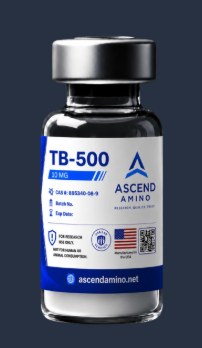
Batch-tested TB-500 for laboratory research use is available through Ascend Amino, including lot-specific certificates of analysis. Research use only — not for human or veterinary use.
Further reading
For background on this compound class, see Healing and tissue-repair peptides in the Science Hub, or compare against BPC-157, the other most-referenced compound in this category.